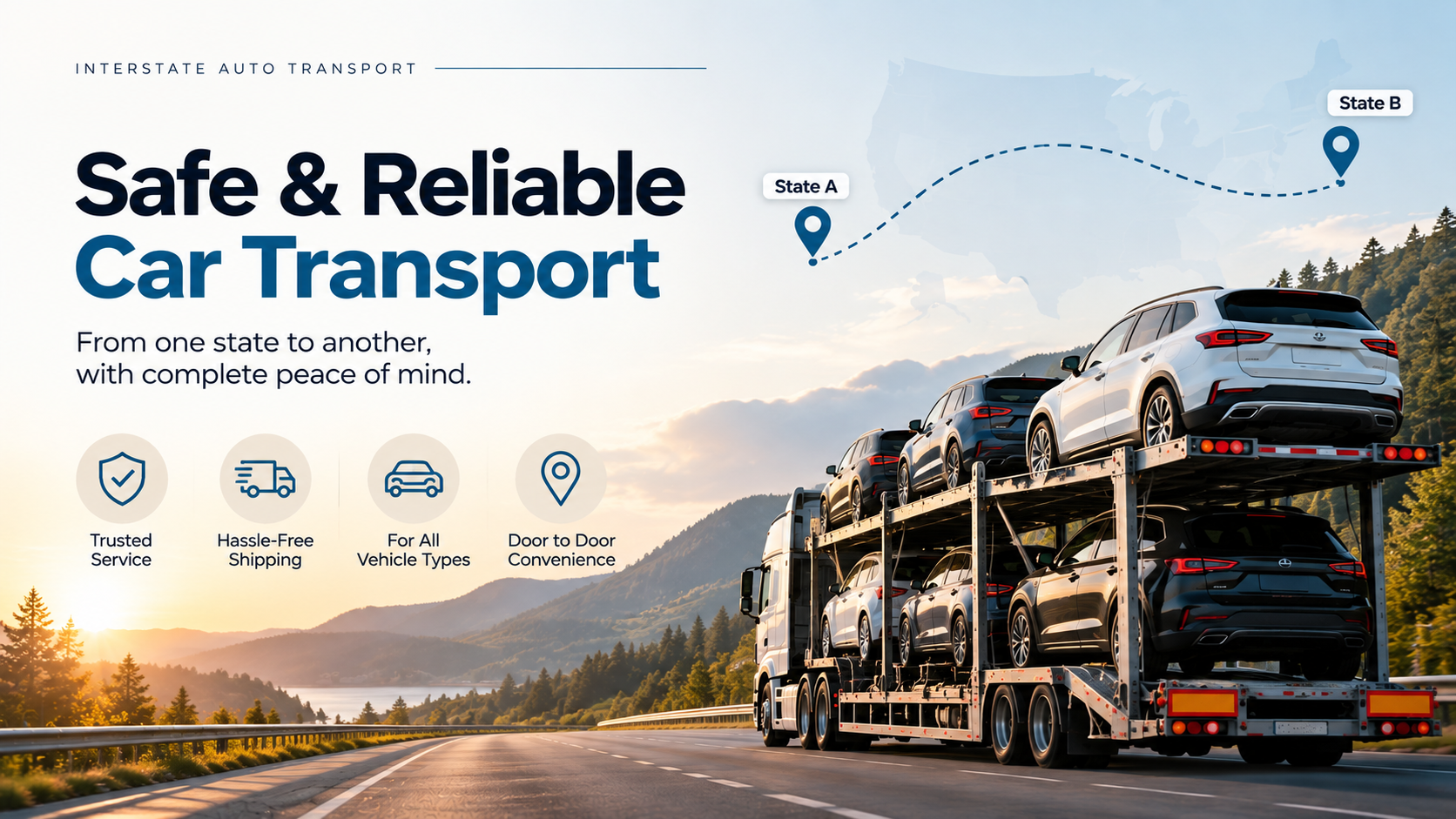
Relocating a car to another state can be intimidating, and choosing the right auto transport service from state to state makes all the difference. With so many buzzwords, jargon and companies vying for your attention, it can be difficult to know what’s most important. This guide breaks down the process step by step, explains what affects the price, and shows how to compare your options so you can book with confidence.
Why Use a Car Transport Service Instead of Driving
Driving a vehicle across several states seems more economical on paper, but the costs add up in reality. Fuel, hotels, meals and time away from work can all be costly, and long journeys add mileage and wear to your car. For many people, a professional service is more practical.
Some of the most common reasons people ship a vehicle:
- Families who are already moving house and can’t take days off for a road trip
- Students who can’t drive the car themselves but need it at college
- Military personnel ordered to a new duty station on short notice
- Car buyers who purchased a vehicle from a seller or dealership far away
- Dealership customers receiving a car from out-of-state dealer inventory
How an Car Transport Service From State to State Works
Understanding the process helps you spot the gaps in what a company tells you. Most interstate car shipping follows four steps.
- Requesting a quote: You share the vehicle’s make and model, pick-up and delivery locations, preferred dates, and whether the car runs. The company uses this to work out a price and outline the service.
- Pick-up: A carrier driver arrives at the agreed location, inspects the vehicle and records its condition on a pickup report, usually called a bill of lading. Both you and the driver should sign it.
- Transportation: Your car travels on a carrier with other vehicles. Transit time depends on distance, route, weather, traffic and the carrier’s other stops. Timeframes are estimates, not commitments.
- Delivery: On arrival, you or a nominated person inspects the car against the original report before signing it off. Note any new damage on the paperwork before the driver departs.
Open vs Enclosed Car Transport
One of the biggest decisions is the type of trailer. Both are widely used and each suits different situations.
- Open transport: Vehicles are exposed to the environment, as they would be on a highway. It is usually more affordable and more flexible with scheduling, with more carriers available. A practical fit for everyday cars, SUVs and basic sedans.
- Enclosed transport: A covered trailer protects the vehicle from weather and road debris. It is generally more expensive, with fewer carriers available, so scheduling may take longer. Often chosen for classic, luxury or exotic cars and low-clearance models.
The right choice depends on the value of your vehicle, your budget and how comfortable you are with exposure.
Also check out our Open Auto Transport and Enclosed Auto Transport services to compare both options in more detail.
Door to Door vs Terminal to Terminal Delivery
- Door to door: The carrier picks up and delivers at your addresses, as close as a large truck can safely and legally get. On narrow or restricted streets, you may need to meet at a nearby open lot. This is the most convenient option for most people.
- Terminal to terminal: You leave the vehicle at one storage terminal and collect it from another. It can sometimes mean a lower price, but you must travel to both locations, and storage fees may apply if you are late collecting the car.
Want the simplest option? Also check out our Door-to-Door Auto Transport service, where the carrier handles pickup and delivery at your addresses.
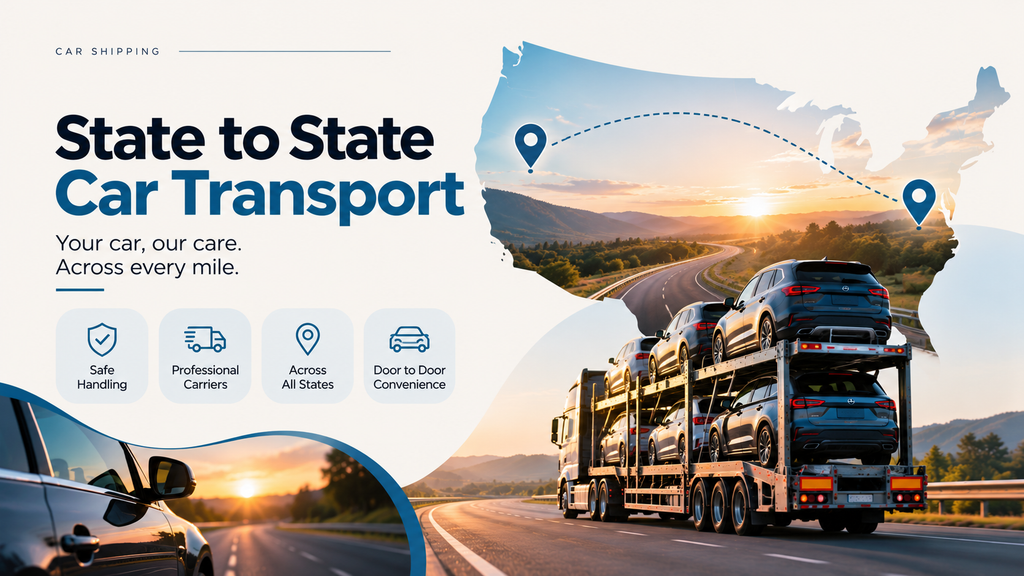
What Does an Car Transport Service From State to State Cost?
No honest company can give you one single “standard” price, because the cost depends on several variables:
| Factor | How it affects the price |
| Route and distance | Longer trips cost more in total, but routes between larger cities can be more efficient than those to or from isolated or rural areas |
| Size and weight of vehicle | Larger vehicles need more trailer space and weight capacity |
| Transport type | Enclosed service usually costs more than open |
| Season and demand | Summer moves, holidays and snowbird travel can increase demand and prices |
| Condition of the vehicle | Non-running vehicles may need special equipment such as a winch |
| Flexible pickup windows | Gives carriers more scheduling flexibility, which can help |
| Pickup and delivery locations | Remote addresses take longer to reach and affect pricing |
If your schedule is tight, also check out our Expedited Car Shipping service for faster pickup and delivery.
How to Compare Car Shipping Quotes
Getting a few quotes is a smart idea, but comparing them takes more than a glance at the bottom line. Make sure every quote clearly states:
- Open or enclosed transport
- Door to door or terminal to terminal service
- Insurance coverage included, and any deductible
- Estimated pickup and drop-off time windows
- Any deposits, payment schedule or additional fees
- Cancellation and rescheduling policy
Why the Cheapest Car Transport Service From State to State Isn’t Always the Best Option
An unusually low quote can be a sign of trouble. The price may be far below the rest because it will go up later, or because the company will have to search for a long time to find a carrier willing to do the job at that rate. A slightly higher quote with well-defined terms, good coverage and straightforward communication can offer better value. Look at what you get, not just what you’re charged.
Check Insurance, Licensing, Reviews and Terms
Do your homework before you choose a vehicle transport company.
| Check | What to do |
| Insurance | Request proof of the carrier’s cargo insurance, what it covers and whether there is a deductible. See how it works with your own auto insurance policy. |
| Licensing | Interstate carriers and brokers in the United States are generally required to register with the Federal Motor Carrier Safety Administration (FMCSA). Its public database lets you look up a company’s registration and safety record. |
| Reviews | Check several independent sites rather than a single good or bad review, and look for patterns, such as repeated comments about communication or how damages were handled. |
| Terms of service | Read the whole contract. Note the damage claim process, cancellation fees, and what happens if you miss your delivery window. |
It also helps to know whether you’re working with a broker, who books shipments with carriers, or a carrier that hauls vehicles itself. Both models are common, and good companies will tell you how theirs works.
If you are looking for a car transport service from state to state, you can look at companies like Prime Haul Express and other well-established options. A quick comparison among a few companies helps you get a sense of what is typical in the industry.
Prime Haul Express offers several related services beyond standard state to state shipping, including open auto transport, enclosed auto transport, door-to-door auto transport, expedited car shipping, heavy equipment shipping and motorcycle shipping. Whichever you need, it’s worth asking each provider which options they cover so you can match the service to your vehicle and timeline.
How to Get Your Vehicle Ready for Shipping
A bit of preparation smooths the hand-off and protects you if problems develop.
- Wash the car so that existing scratches and dents are visible.
- Take dated photos of all sides, roof, wheels, interior and odometer.
- Remove personal items. Most carriers won’t cover belongings left behind, and extra weight can cause problems.
- Keep the fuel level low, typically around a quarter tank, to save weight.
- Check for leaks and record any mechanical problems ahead of time.
- Secure loose parts like antennas, spoilers or bike racks.
- Disable toll tags and alarms, or tell the driver how to do so.
- Fill out the inspection report with the driver at pickup and keep your copy.
Shipping something other than a car? Also check out our Motorcycle Shipping and Heavy Equipment Shipping services.
Questions to Consider Before Booking
The simplest way to tell if a company is transparent is to ask direct questions.
- Are you a broker, a carrier, or both?
- Is my quote an estimate or a binding price, and what could change it?
- What insurance covers my car, and what is my deductible?
- How are damage claims handled, and how long do they take?
- What are the usual pickup and delivery windows, and what happens if they’re missed?
- When is payment due, and are deposits refundable?
- Can I track my vehicle or contact the driver in transit?
- What are the cancellation and rescheduling terms?
- Will my vehicle ship open or enclosed, door to door or terminal to terminal?
Conclusion
The best way to ship a vehicle comes down to comparison and clarity. Select the transport type and delivery method that best fit your needs, obtain several detailed quotes, and verify licensing, insurance and customer feedback. Prepare your car well, document its condition and read the paperwork before you sign. These steps won’t eliminate every variable, because weather, traffic and logistics can always change a schedule, but they put you in a better position to make a safe, informed decision.
Frequently Asked Questions
How long does it take to ship a car across states?
Distance, route, season and carrier scheduling all play a part. Shorter trips can take a couple of days, while cross-country shipments may take longer. Companies usually give an estimated window, not a guaranteed date.
Open vs enclosed transport: which is better?
Neither is always best. Open transport suits most standard vehicles and budgets, while enclosed transport is often chosen for classic, luxury or high-value cars that need extra protection.
Can I leave personal belongings in the car?
Most companies advise against it. Cargo insurance usually doesn’t cover personal belongings, and the extra weight can cause trouble. Check your provider’s specific policy.
Is shipping covered under my car insurance?
Benefits vary by policy. Ask your insurer whether you’re covered during transport, and get the carrier’s insurance details separately.
Do I have to be home for pick-up and delivery?
The vehicle must be inspected, the inspection report signed by you or a trusted representative, and the keys handed over or received.
Can I ship a non-running car?
Often yes, but it may require special equipment and affect pricing. Tell the company the vehicle’s condition when asking for a quote.