
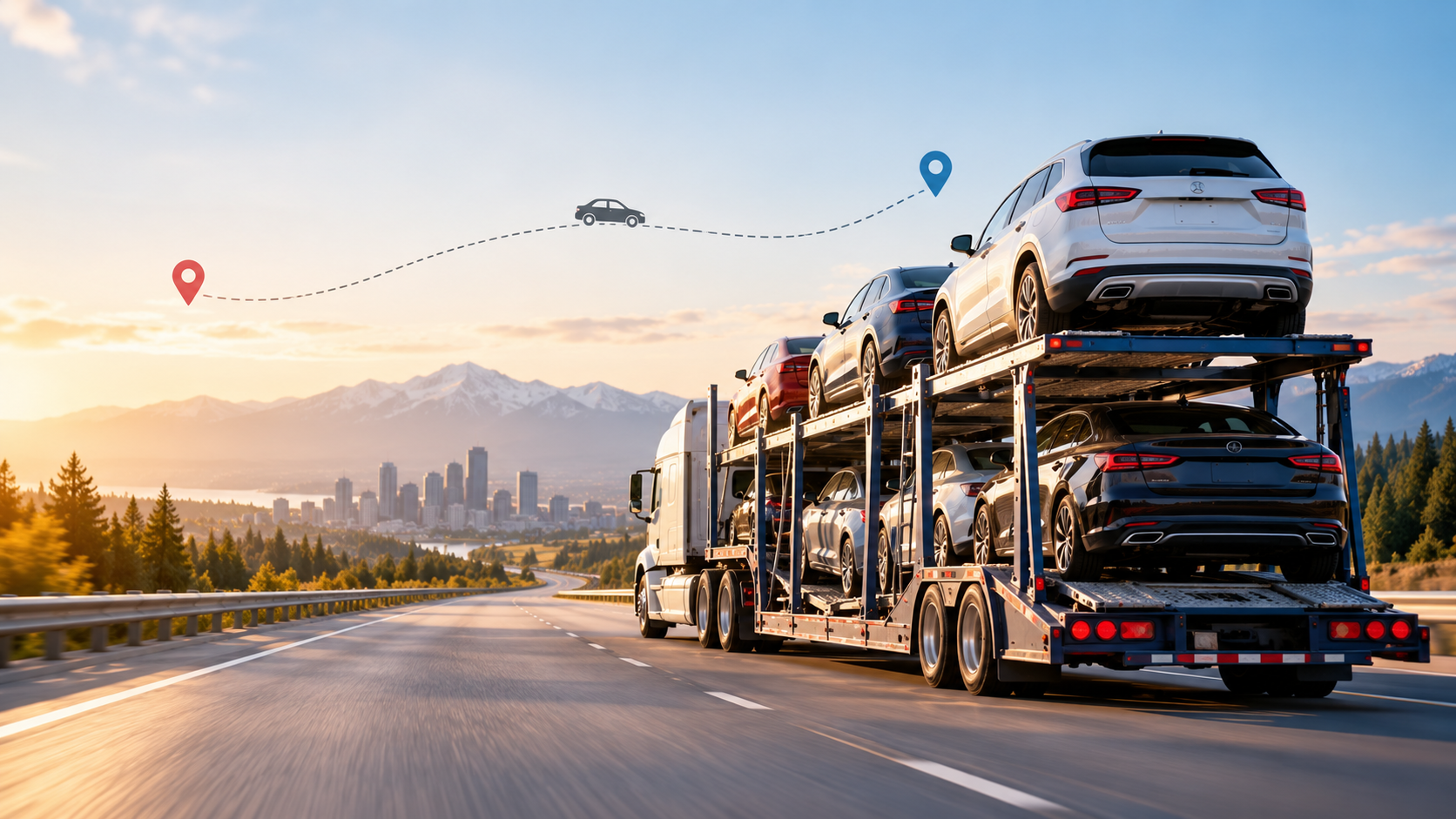
Moving a car from coast to coast is a big job, whether you are moving a family, starting college, reporting to a new duty station or picking up a car you bought out of state. There are many cross country auto transport companies that can save you days of driving and thousands of miles of wear. This guide shows how the process works, what affects timing and car shipping cost, and how to prepare your vehicle.
How Cross-Country Car Shipping Works
Most auto shipping services follow the same five steps.
- Quote. You share your vehicle details, pickup and delivery locations, and preferred dates. Gathering several auto shipping quotes helps you see what’s included.
- Booking. You confirm the details, review the terms, and schedule a pickup window. Read the cancellation and damage-claim terms before you sign.
- Pickup. The driver inspects the vehicle with you, notes any existing damage on an inspection report, and loads it.
- Transit. Your vehicle travels on a carrier, often alongside others. Good companies give you a way to check in on progress.
- Delivery. You or a designated person meets the driver, compares the vehicle against the inspection report, and signs off.
What Affects the Timeline
No honest company can promise an exact schedule for coast to coast car shipping, because several things shape it:
- Distance and route: Longer routes and less-traveled corridors can take more time to fill a carrier.
- Season and weather: Winter storms, summer peak moving season, and regional events can all cause delays.
- Driver schedules: Carriers make multiple stops, and their hours-of-service limits affect pace.
- Pickup window: A wider window generally gives the dispatcher more room to assign a driver.
Treat any date as an estimate, and build in a buffer, especially if you need the car for a job start, school term or military report date.
What Affects Car Shipping Cost
Prices vary by company and by day, so be wary of any figure quoted without your vehicle details. The main factors are:
- Distance and route: Popular routes are often easier to price than remote ones.
- Vehicle size and condition: Larger or heavier vehicles take more space, and non-running vehicles may need special equipment.
- Season: Demand rises and falls through the year.
- Open vs. enclosed transport: Enclosed trailers usually cost more.
- Date flexibility: A flexible schedule can give a carrier more room to work with.
Open vs. Enclosed Transport for Long Distances
Open carriers are the most common option. Your vehicle is exposed to weather and road debris, much as it would be if you drove it. Enclosed carriers protect the vehicle from the elements and are often chosen for luxury, classic, exotic or high-value cars. For an everyday vehicle, open transport is often a practical choice. For a vehicle you’d be upset to see with a stone chip, enclosed may be worth the extra cost.
Door-to-Door vs. Terminal Delivery
Door-to-door service means the driver picks up and delivers as close to your addresses as a large truck can legally and safely get. Terminal service means you drop off and collect at a storage lot, which can be less convenient and may involve storage terms. Ask which option your quote covers, since large carriers can’t always access narrow residential streets.
How to Compare Auto Transport Companies and Quotes
When you compare auto transport companies cross country, look beyond the bottom line. A quote that looks low may leave out fees or rely on a broker finding a carrier later. Confirm whether the company is a carrier, a broker or both, and what the quote actually includes.
| What to Check | Why It Matters | Questions to Ask |
| FMCSA/USDOT registration | Interstate carriers and brokers must be registered, and the record shows their status | What are your USDOT and MC numbers? Are you a carrier, broker or both? |
| Insurance coverage | Confirms who pays if the vehicle is damaged in transit | What does your cargo insurance cover, and is there a deductible? Can I see the certificate? |
| Reviews and reputation | Shows patterns in communication, delays and claims handling | How do you handle complaints and damage claims? |
| Quote details | Prevents surprises on the final bill | Is this quote all-inclusive? Are there fuel, storage or fee changes? |
| Pickup and delivery terms | Sets realistic expectations for scheduling | Is the pickup window a range or a specific date? How will I be updated? |
| Payment and cancellation | Protects you if plans change | When is payment due, and what is your cancellation policy? |
You can verify registration yourself on the FMCSA website by searching a company’s USDOT number. Cross-check reviews on several independent platforms rather than relying on a single source.
One Company to Consider
You can get a quote from Prime Haul Express, a vehicle transport company, if you are looking for quotes. Use the questions in the table above to confirm services, coverage areas, credentials, insurance and terms directly with any provider, including this one. First, you can call one of the auto transport companies cross country you are considering and get specifics on your car and trip.
Vehicle Prep Checklist
- Wash the vehicle so existing scratches and dings are easy to see.
- Take dated photos of every side, the roof, interior and odometer.
- Remove personal items and toll tags. Carriers generally aren’t insured for belongings left inside.
- Keep the fuel level low, around a quarter tank, unless your company says otherwise.
- Check fluids and leaks and fix anything that could drip onto vehicles below.
- Check the battery and tires so the car can be driven on and off the carrier.
- Secure or remove loose parts like antennas, spoilers and bike racks.
- Keep your inspection report copy and compare it at delivery.
Common Mistakes to Avoid
- Choosing solely on the lowest quote without checking what it includes
- Skipping the FMCSA lookup or insurance verification
- Leaving belongings in the vehicle
- Not documenting the car’s condition before pickup
- Assuming dates are guaranteed instead of asking how delays are handled
- Skipping the inspection at delivery, especially in poor light
Questions to Ask Before Booking
- Are you the carrier or a broker, and what are your USDOT and MC numbers?
- Is my quote all-inclusive, and what could change it?
- What does your insurance cover, and what’s the claims process?
- Is pickup and delivery door-to-door or terminal?
- How will you communicate if there’s a delay?
Frequently Asked Questions
How much notice do you need in advance?
Earlier is generally easier, especially in busy moving seasons, but some companies can accommodate shorter notice. Ask what is realistic for your dates.
Do I need to be there for pickup and delivery?
“Someone you trust or you should be, to sign the inspection report and hand over or receive the keys.
Can I ship a non running car?
Yes, often but it can mean extra equipment. Mention this when getting quotes.
Which is better open or close transport?
It is contingent upon the value of your vehicle and your budget. Open is typical for everyday cars, enclosed adds protection.
What if my car gets damaged?
Note it on the delivery inspection report before signing, take a photo of it and contact the company immediately to start a claim.
Conclusion
When you know the steps, compare quotes carefully, check credentials and prepare your vehicle properly, cross-country car shipping goes more smoothly. Slow down, ask pointed questions and be flexible with your timing expectations. When you’re ready, request a no-obligation quote from Prime Haul Express and compare to other quotes to find the best fit for your move.